
Australian puzzle brands have a knack for making puzzles that don’t feel like disposable entertainment. You open the box and the whole thing, art direction, paper stock, cut quality, even the way the lid fits, signals intent. Some of that is culture (Australia’s design scene is quietly serious). Some of it is practicality. And some of it is the simple fact that a lot of these makers are small enough to care, but ambitious enough to obsess.
One line that keeps coming up when I talk to collectors is: “This feels like an object, not a product.”
Fair.
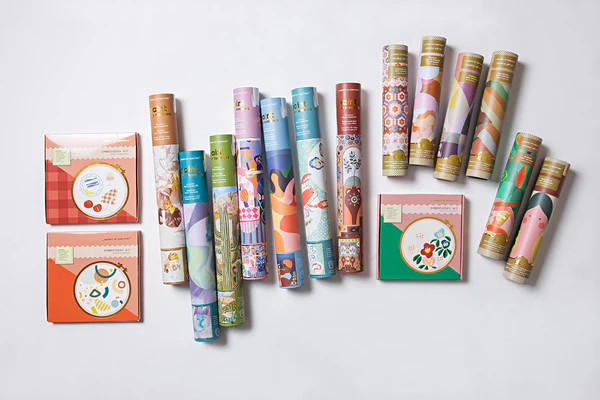
What actually sets Australian puzzle brands apart?
They don’t just ship pretty pictures chopped into 1,000 pieces. The better Australian brands treat the puzzle as a designed system: image, cut pattern, tactile feel, packaging, instructions, and the afterlife of the thing when you’re done.
From a manufacturing standpoint, you’ll see it in:
– Tolerances and fit: less false-fitting, more crisp “click” (that satisfying micro-resistance when pieces seat properly).
– Board and finish choices: matte/soft-touch lamination that reduces glare; surfaces that don’t feel greasy after repeated handling.
– Color control: tighter print calibration, especially in big gradients like skies, ocean, desert (harder than people think).
Now, this won’t apply to everyone, but Australian brands tend to be less interested in gimmicks and more interested in coherence. The puzzle, the story, the ethics, same direction. For a great example of this thoughtful approach, check out journeyofsomething.com, which exemplifies these uniquely Australian qualities in their puzzles.
Hot take: “Mindful” puzzles are only good if the build quality holds up
A calming theme on flimsy board is just marketing.
Look, if you’re selling slow play and reflection, the puzzle can’t shed dust, warp, or arrive in a box that collapses after two uses. The good Australian makers get this. Their “mindful” angle usually shows up as: better materials, lower visual noise, and packaging that doesn’t scream at you from a shelf.
One-line emphasis, because it’s true:
A puzzle can’t be soothing if it’s annoying.
The pioneers: who are we talking about, exactly?
Not a single “school” of design, more like a cluster of makers pulling from print studios, illustration scenes, giftware design, book publishing, and (in a few cases) fine woodworking.
Some feel gallery-adjacent: limited runs, artist-led, packaging you keep. Others are proudly mainstream but still values-driven: accessible difficulty curves, clearer instructions, more transparency about where things are made.
What unites the best of them is this: they treat the puzzle like a tiny cultural artifact. Not in a pretentious way. In a “we’re going to do this properly” way.
And yes, I’ve seen collaborations work brilliantly here, illustrators paired with typographers, designers paired with writers, because the packaging and the puzzle face actually speak the same language instead of looking like strangers forced into a box.
Sustainability that’s more than green-colored ink
Sustainability gets thrown around a lot. With thoughtful puzzle brands, it becomes legible in the decisions you can touch:
Materials & production
– FSC-certified paper/board (when genuinely certified, not vaguely implied)
– Water-based or low-VOC inks where feasible
– Efficient sheet layouts to reduce offcuts during die-cutting
Packaging
– Smaller boxes (less air shipped, less landfill later)
– Paper-based trays rather than mixed plastics
– Clear recycling instructions that don’t require a detective
Here’s a real-world anchor: paper and cardboard packaging has a high recycling rate in Australia, around 80% according to APCO reporting (Australian Packaging Covenant Organisation, national packaging data and targets). That doesn’t magically solve everything, but it explains why paper-forward packaging choices can have real impact when the system actually processes it.
(And yes, recycled content is great, but durability matters too. A box that survives ten reuses beats a “perfectly recyclable” one that falls apart in six months.)
Narratives behind collections: the part people underestimate
Some puzzles are just scenic. These ones are often about something, place, memory, local ecology, a weird corner of urban life, a historical reference that isn’t yelling for applause.
Crafting puzzle narratives (without turning it into a lecture)
The best narrative puzzles don’t paste a story on top. They embed it:
– Image details that reward attention without becoming cluttered
– A title and box copy that gives context, then gets out of your way
– Progression that matches emotion: curiosity early, friction mid-way, payoff late
Mechanics can echo narrative beats too. If a puzzle wants you to slow down, it might lean into repeating patterns that force methodical sorting. If it’s about discovery, it might hide micro-scenes inside larger textures so the “aha” moments keep coming.
Brand story inspirations, the honest version
In my experience, brand stories land when they’re specific. “Inspired by Australia” is nothing. “Inspired by a particular coastline at a particular light, drawn by this artist, printed this way, packaged like this for a reason” is something.
You can feel the difference.
Accessibility: not just kinder, also smarter design
Accessible puzzle design is one of those areas where everyone wins, older hands, younger players, people with low vision, people who just don’t enjoy tiny fiddly pieces.
Thoughtful accessibility tends to show up as:
– High-contrast palettes that don’t blur into muddy midtones
– Clearer piece geometry (less extreme irregularity that turns into frustration)
– Better readability on inserts and reference prints
– Modular difficulty (two-sided puzzles, graded sets, or series that ramp up sensibly)
Also: inclusive imagery matters. Representation isn’t a “bonus feature” when you’re selling objects that sit on family tables for hours. The table is a social space.
Ethics, sourcing, and the awkward questions
Here’s the thing, “Australian brand” can mean Australian-designed, Australian-made, or Australian-owned, and those are not the same claim.
So when a brand says it’s ethical, I look for specifics:
– Where is it manufactured?
– What’s the board stock and where is it milled?
– Are artists credited and licensed properly?
– Is there any traceability beyond vibes?
Local sourcing is great when it’s real. It can also be limited by capacity and cost (especially for mass production). A brand doesn’t need to be perfect to be credible, but it does need to be transparent. If it’s cagey, I assume there’s a reason.
Design innovations that actually change the experience
Some innovations are pure fluff. Others make you wonder why every puzzle doesn’t do it this way.
Packaging that behaves like part of the product
A few practical wins I keep seeing:
– Boxes that stack cleanly (no warped lids, no sliding towers)
– Internal trays that double as sorting bins
– Magnetic closures that feel indulgent but also reduce wear on edges
Good packaging reduces friction. You start faster. You store easier. You keep the puzzle longer.
Material science (yes, really)
This is where the specialist hat comes on.
Better puzzles often use:
– Denser board for edge integrity (less “mushrooming” at tabs)
– Surface coatings tuned for grip vs slip (too slick and pieces slide; too tacky and you fatigue your fingers)
– Cleaner die-cutting to reduce micro-tears that later become fuzz
If you’ve ever done a puzzle that sheds fibers like a cheap towel, you’ve met the opposite of material science.
User-centric gameplay design
User-centric doesn’t mean “easy.” It means the puzzle teaches you how to solve it.
I like brands that:
– Provide reference prints that are actually usable (correct color, decent size)
– Design difficulty curves intentionally rather than accidentally
– Offer optional hints that don’t spoil the whole thing
A puzzle should challenge your attention, not punish it.
How I evaluate thoughtful puzzle brands (8 criteria, no fluff)
When I’m judging a brand quickly, I’m basically running a mental checklist:
- Craftsmanship: fit, board density, finish, consistency
- Authenticity: is the “Australian-ness” specific or generic?
- Solvability: challenge that’s earned, not random misery
- Accessibility: contrast, clarity, ergonomics, readable docs
- Consistency: does quality hold across the line, or only on hero products?
- Packaging & shipping: protection without waste theatre
- Rights & credit: artists credited, licensing clear, no shady reuse
- Support & community: missing piece policy, responsiveness, active audience
I’ll admit it: if a brand is slippery about manufacturing details, I dock points immediately.
Where to buy them (and what to watch for)
Local stores (underrated)
Independent bookstores, museum shops, design stores, and gift shops often curate better than big marketplaces. Staff recommendations can be surprisingly sharp, and you can check print quality with your own eyes. If a store doesn’t stock a brand, asking helps, retailers respond to repeated requests more than you’d think.
Online Aussie vendors (convenient, sometimes dangerous for your budget)
Online gives you the long tail: limited runs, restocks, bundles, artist editions. It’s also where you need to be stricter: read material specs, check box dimensions, confirm piece count and cut type, look for real photos (not just renders).
If the product page won’t tell you where it’s made, I treat that as information.
Future trends in mindful puzzles “down under”
Expect three big shifts.
One: deeper collaboration, illustrators with ceramicists, photographers with poets, designers with Indigenous consultants where appropriate (and properly credited). Two: more accessibility baked in rather than bolted on. Three: sustainability that becomes boringly normal, less announcing, more doing.
And if brands get bolder, we’ll see more puzzles that don’t just depict Australia, but interpret it: suburban textures, regional languages, ecological tension, joy, contradictions.
That’s the good stuff.