
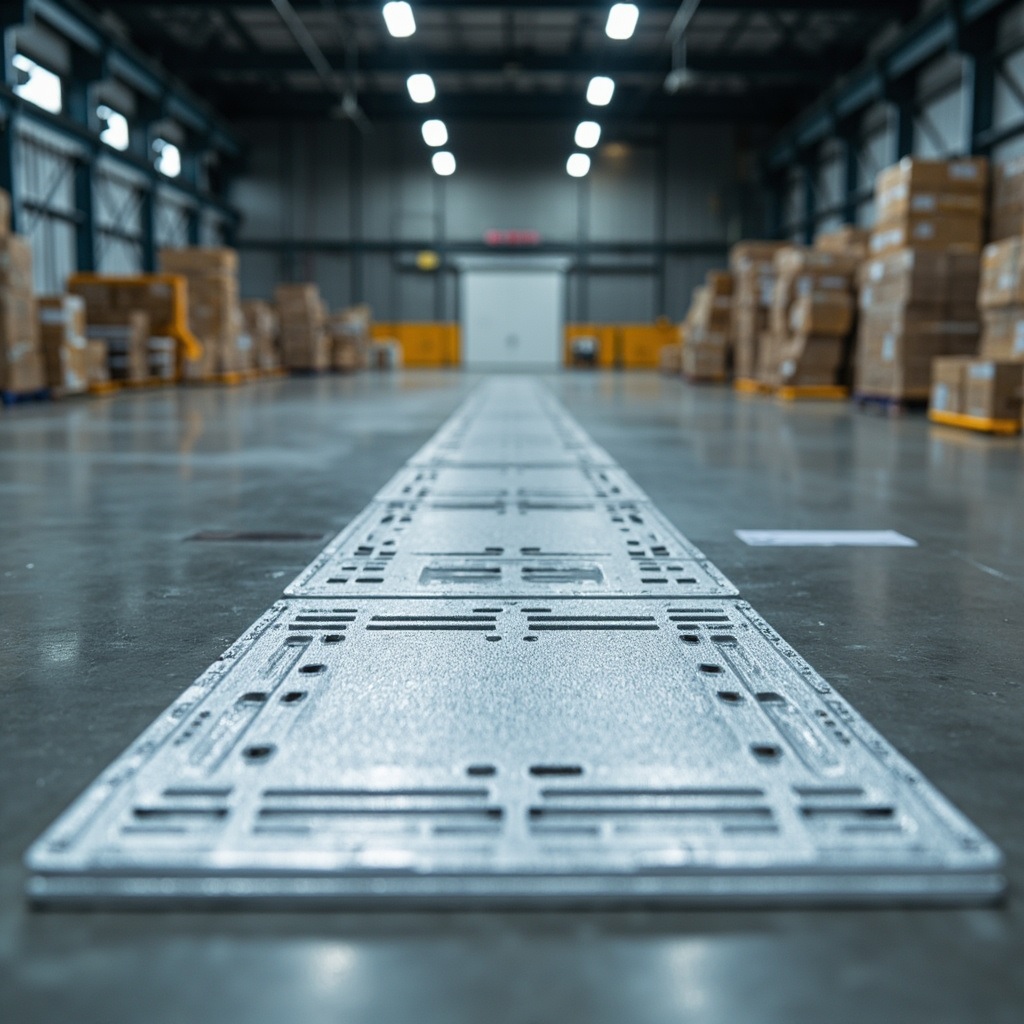
 Every logistics manager knows the nightmare: a forklift catches a corner, a pallet jack skids sideways, and suddenly you’re looking at a shattered baseboard, a dented wall, and a repair bill that eats into your quarterly margins. It’s not just the damage—it’s the downtime, the safety hazard, and the slow erosion of a facility that’s supposed to run like a well-oiled machine. That’s where heavy-gauge aluminum baseboards stop being a footnote in your building specs and start being a frontline defense.
Let’s talk about impact resistance. Not in a lab-coat, theoretical sense, but in the real-world chaos of a logistics center. You’ve got 5,000-pound loads swinging around corners, electric pallet trucks zipping through narrow aisles, and the constant, unforgiving rhythm of loading docks. Standard PVC or thin-gauge metal baseboards? They buckle. They crack. They leave jagged edges that snag tires and trip workers. Heavy-gauge aluminum, on the other hand, laughs at that kind of abuse. It’s not just thicker—it’s engineered to absorb energy without deforming permanently. Think of it as the difference between a soda can and a truck frame. One gives way instantly; the other bends, flexes, and springs back.
Here’s the kicker: aluminum doesn’t rust. In a logistics center, where spills happen, floors get washed down, and humidity can spike, steel baseboards become a corrosion nightmare. Heavy-gauge aluminum stays clean, stays strong, and stays intact. That means you’re not replacing baseboards every six months because a forklift clipped them or moisture ate through the paint. You’re installing them once and forgetting about them.
But let’s get specific about the impact. A typical logistics facility sees an average of 15 to 20 minor wall impacts per week. That’s not a guess—that’s data from facility managers who track maintenance. Multiply that by 52 weeks, and you’re looking at hundreds of repairs annually. Heavy-gauge aluminum baseboards slash that number to near zero. They act as a sacrificial barrier, taking the hit so your drywall, concrete, or insulated panels don’t. And because aluminum is lightweight yet incredibly strong, installation is faster and less labor-intensive than steel alternatives. You save on both material cost and man-hours.
There’s also the safety angle. Jagged, broken baseboards are trip hazards. They catch on pallet wrappers, snag on equipment, and create sharp edges that can cut through protective gear. A smooth, intact Aluminum Alloy Baseboard eliminates those risks. It’s a simple upgrade that your safety officer will thank you for—and that your insurance adjuster will notice.
Now, I know what some of you are thinking: “Aluminum is expensive.” Yes, upfront cost is higher than plastic or thin metal. But run the numbers over a five-year cycle. Factor in replacements, labor, downtime, and injury claims. Heavy-gauge aluminum wins by a landslide. It’s not an expense; it’s an investment in operational continuity.
One facility manager I spoke with described it this way: “We used to budget for baseboard repairs every quarter. Now, I can’t remember the last time we touched them. They just work.” That’s the kind of reliability that keeps a logistics center humming—where every square foot is optimized for speed, safety, and durability.
So if you’re designing a new warehouse or retrofitting an existing one, don’t let baseboards be an afterthought. Choose heavy-gauge aluminum. It’s the silent workhorse that takes the hits, keeps your walls clean, and lets your team focus on what matters: moving product, not fixing damage.